


 Oaxaca Culture
Every July, the city of Oaxaca transforms into a vibrant tapestry of colors, music, dance, and community spirit.
The Guelaguetza, often called “La Fiesta de los Lunes del Cerro,” is one of Mexico’s most important cultural festivals—a living expression of Indigenous heritage, collective generosity, and deep-rooted identity.
For travelers, witnessing the Guelaguetza is not only a cultural experience but an unforgettable journey into the soul of Oaxaca.
What Is the Guelaguetza?
The word Guelaguetza comes from the Zapotec language and refers to the act of giving, sharing, and supporting one another as a community.
This tradition embodies reciprocity—when you give today, you receive tomorrow.
In Oaxaca, this concept isn’t just symbolic; it shapes social relationships, ceremonies, and communal life across the state’s eight ancestral regions.
During the modern Guelaguetza celebration, delegations from these regions gather on the Cerro del Fortín to perform their traditional dances, music, and rituals.
Each group shares gifts—such as mezcal, fruit, bread, tortillas, or handmade crafts—with the audience, honoring the spirit of community exchange that has existed for centuries.
A Festival Rooted in History
Although the Guelaguetza has ancient Indigenous roots, the version celebrated today reflects centuries of cultural evolution.
Historians trace its origins back to pre-Hispanic ceremonies dedicated to Centeotl, the goddess of corn.
These festivities honored agricultural cycles, fertility, and the sustaining power of maize.
After the arrival of the Spanish, the tradition intertwined with Catholic celebrations, particularly those dedicated to the Virgin of Carmen.
By the 20th century, the festival took on a more formal structure, evolving into the multicultural showcase known today.
Yet despite modernization, its essence remains deeply Indigenous—centered on community, gratitude, and shared identity.
The Eight Regions That Make the Guelaguetza Come Alive
Each delegation that participates in the Guelaguetza represents one of Oaxaca’s diverse cultural regions.
Their dances, clothing, and music tell stories that have been preserved for generations.
1. Valles Centrales
Known for the iconic Jarabe del Valle and the elegant attire of the women from San Antonino and San Bartolo Coyotepec.
2. La Sierra Norte
A region of forests, weaving traditions, and dances that honor the natural world.
3. La Sierra Sur
Famous for energetic dances and strong Zapotec and Mixtec influence.
4. La Mixteca
Home to the powerful Danza de la Chilena, wooden masks, and stories of warriors and wind spirits.
5. La Costa
Known for Afro-Mexican rhythms, tropical dances, and vibrant musical styles.
6. El Istmo de Tehuantepec
One of the most expressive delegations, celebrated for its colorful Tehuana dress and lively sones istmeños.
7. La Cañada
Offers dances filled with flowers, birds, and joyful movements that reflect the region’s ecology.
8. La Cuenca del Papaloapan
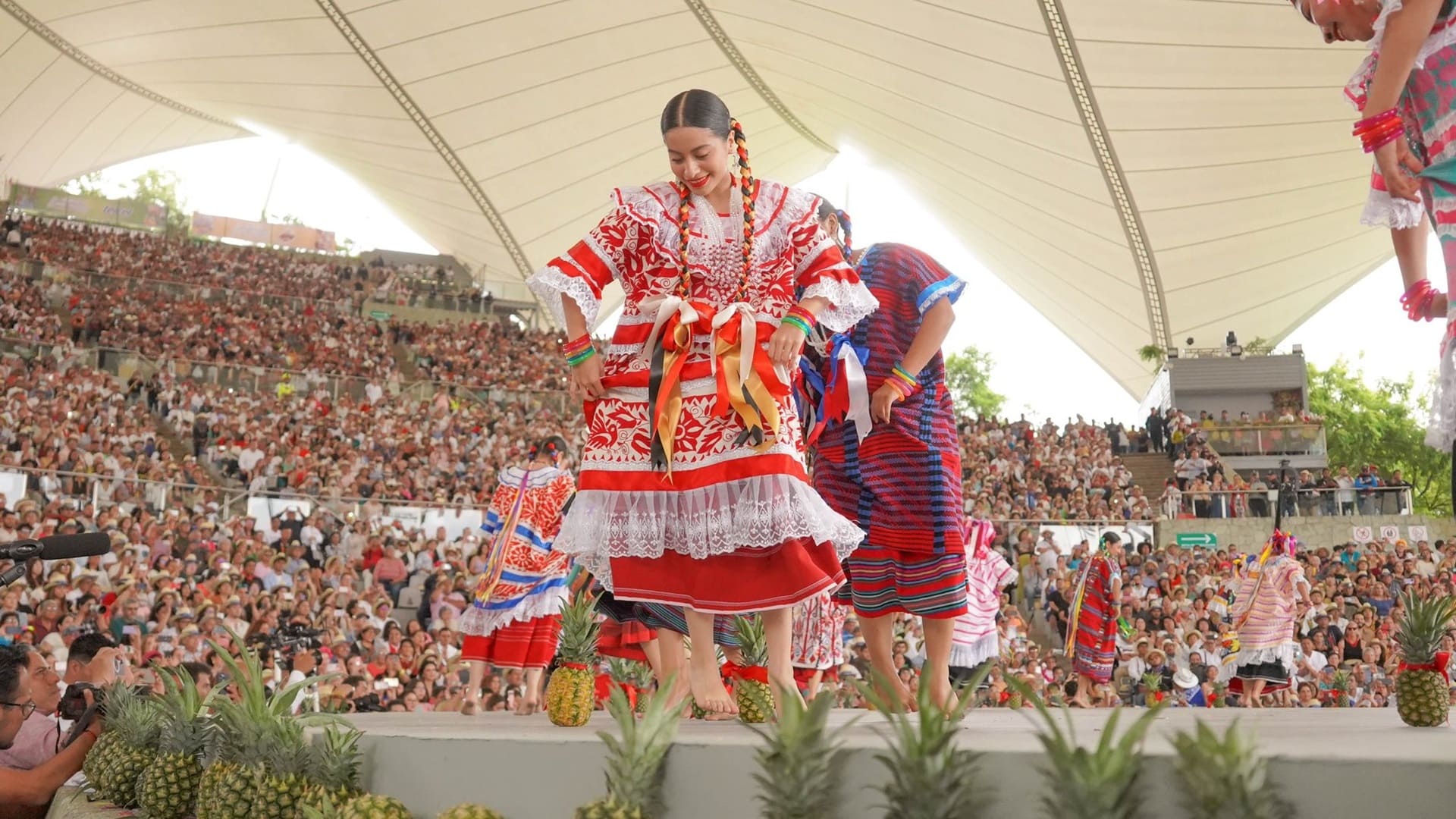
Known for the famous Flor de Piña dance—a modern creation that has become a symbol of the festival.
When Is the Guelaguetza Celebrated?
The festival takes place every year on the last two Mondays of July, known as the Lunes del Cerro.
When one of the Mondays falls on July 18 (Anniversary of Benito Juárez’s death), the celebration moves to the following Monday, preserving its traditional order.
Beyond the main performances in the auditorium on the Cerro del Fortín, the city comes alive with cultural activities:
- Oaxacan food festivals
- Mezcal tastings
- Textile fairs
- Indigenous band concerts
- Traditional weddings and processions
- Parades called convites
The Dances That Tell Stories
Each Guelaguetza dance represents a narrative—courtship, harvests, celebrations, or even historical resistance.
Costumes are handmade using ancient techniques: backstrap looms, natural dyes, embroidered stories, and symbols that connect performers to their ancestors.
Some of the most iconic dances include:
- Flor de Piña from Tuxtepec
- La Danza de la Pluma from the Valles Centrales
- Los Sones y Jarabes del Istmo
- La Danza de los Diablos from the Costa
- El Jarabe Mixteco
These dances aren’t staged performances—they are community expressions passed down through families, towns, and generations.
Tips for Travelers Attending the Guelaguetza
If you’re planning to experience this iconic Oaxacan celebration, here are some local tips to make the most of your visit:
- Book early: Hotels and tours fill up months in advance.
- Buy official tickets: Avoid scalpers and use authorized sellers or official tourism pages.
- Arrive early: Seats, especially in the free section, are first come, first served.
- Stay hydrated: July temperatures can be warm, especially midday.
- Participate: Street parades, markets, and fairs are just as magical as the main show.
Why the Guelaguetza Matters
For the people of Oaxaca, the Guelaguetza is more than a festival—it is a reaffirmation of identity, a reminder of shared values, and a celebration of Indigenous cultures that continue to thrive.
For travelers, it offers a rare opportunity to witness living traditions that have resisted time, colonization, and modern pressures.
Whether you come for the dances, the food, the textiles, or the sense of community, the Guelaguetza remains one of the most powerful cultural experiences in Mexico.
Ready to Experience the Guelaguetza?
If you’re planning a trip to Oaxaca in July, attending the Guelaguetza should be at the top of your list.
Explore our Oaxaca tours, learn more about local traditions, and let us help you create a journey filled with culture, flavor, and unforgettable memories.
Book your Oaxaca cultural experience today.


