


 Archaeology & History
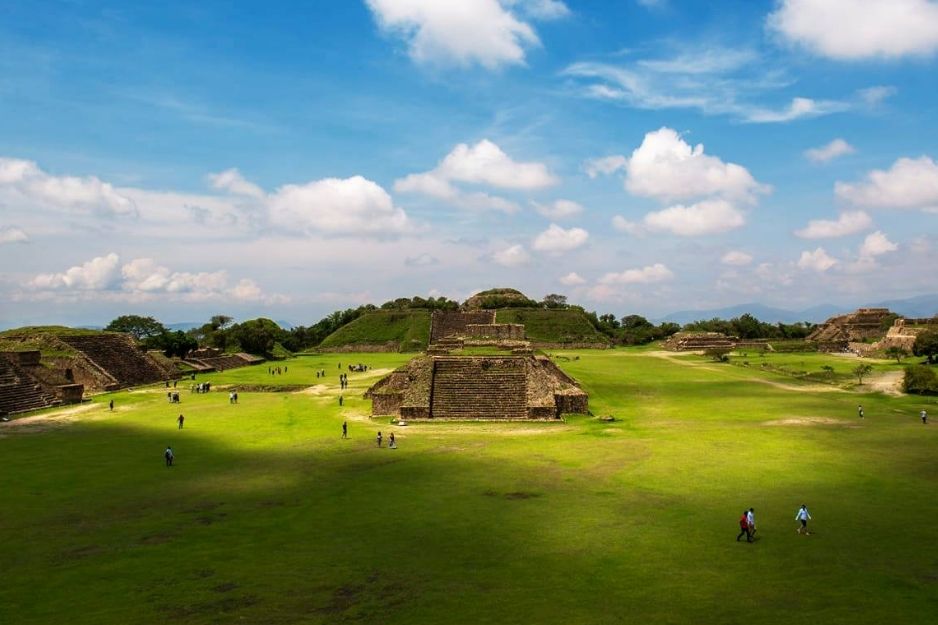
Rising dramatically above the valleys of Oaxaca, Monte Albán is one of the most awe-inspiring ancient sites in all of the Americas. This UNESCO World Heritage Site was once the thriving capital of the Zapotec civilization — a city of temples, plazas, and celestial alignments that flourished for over 1,500 years. Whether you’re a history enthusiast, a curious traveler, or simply someone who wants to understand the soul of Oaxaca, a visit to Monte Albán is absolutely non-negotiable. Here’s everything you need to know before you go.
The History of Monte Albán: A Zapotec Capital Like No Other
Monte Albán was founded around 500 BCE, making it one of the earliest cities in Mesoamerica. Located on an artificially flattened hilltop about 9 kilometers west of present-day Oaxaca City, the site sits at an elevation of roughly 1,940 meters above sea level — a strategic position that allowed its rulers to oversee the entire Central Valleys region.
The site was the political, religious, and commercial heart of the Zapotec civilization. At its peak, between 200 BCE and 700 CE, Monte Albán may have housed a population of 25,000 people. The Zapotecs were sophisticated astronomers, architects, and traders whose influence stretched far beyond the Oaxacan valleys. Their writing system, one of the oldest in the Western Hemisphere, has been found carved into stone monuments throughout the site.

After roughly 500 CE, Monte Albán began a gradual decline. By 700–900 CE, much of the population had dispersed into smaller settlements across the valley. The Mixtecs later used the site, particularly for elite burials — Tomb 7, discovered in 1932, yielded one of the richest pre-Columbian treasure hoards ever found in Mexico, now on display at the Oaxacan State Museum.
In 1987, Monte Albán was inscribed as a UNESCO World Heritage Site, recognizing its outstanding universal value as a testimony to the Zapotec civilization.
What Does “Monte Albán” Mean? Understanding the Name
The name “Monte Albán” is Spanish and translates roughly to “White Mountain” or “White Hill.” Some historians believe it may refer to the pale limestone of the hilltop that gleams in the afternoon sun. However, its original Zapotec name was likely Dani Baá, meaning “sacred mountain” or “hill of the tiger/jaguar” in certain linguistic interpretations — though scholars continue to debate the exact etymology.
What is certain is that the site’s location was deeply intentional. The Zapotecs did not simply stumble upon this hill — they spent generations reshaping it. Over two million tons of earth and rock were moved to create the massive central plaza that defines the site today. This was a city built as a statement of power, order, and cosmic alignment.
Key Monuments and Structures to Explore
The main platform of Monte Albán covers an area of roughly 300 by 200 meters. Within it, you’ll find an extraordinary collection of pyramids, temples, tombs, and ball courts. Here are the highlights you should not miss:
- The Main Plaza (Gran Plaza): The vast central space that once hosted ceremonial gatherings for thousands of people. Standing here, with pyramids on all sides and the valley below, is a genuinely moving experience.
- Building J (The Observatory): One of the most enigmatic structures on-site. Its unusual arrow-like orientation — deliberately angled away from the grid of other buildings — is believed to have been used for astronomical observations, possibly tracking the heliacal rising of certain stars or the movements of Venus.
- The Danzantes Gallery: A collection of carved stone slabs depicting human figures in unusual postures. Once interpreted as dancers, many archaeologists now believe these figures represent captives or sacrificed enemies — a graphic demonstration of Zapotec military power.
- The North Platform: The largest structure on the site, offering panoramic views of the surrounding valleys and the city of Oaxaca in the distance.
- The Ball Court: One of the oldest in Mesoamerica, confirming Monte Albán’s role as a major cultural and ritual center. The specific rules of the ball game played here remain a subject of academic fascination.
- The Tombs: Dozens of underground tombs have been excavated on the hillside. Several are open to visitors and feature elaborate murals and niches that speak to Zapotec beliefs about the afterlife.
A Traveler’s Story
“I had visited ruins before — in Mexico, Guatemala, even Cambodia — but nothing prepared me for Monte Albán. It wasn’t just the scale of the plaza, or the way the pyramids frame the sky. It was the silence at 8 in the morning, before the crowds arrived, with mist still hovering over the valley below. My guide explained how every building aligned with something — a solstice, a star, a mountain peak. By the time we left, I felt I’d walked through something alive, not just ancient.” — Sarah T., visitor from Canada
Practical Visiting Guide: Everything You Need to Know
How to Get There
Monte Albán is located approximately 9 km from Oaxaca City’s historic center. Several options exist for getting there, including shared colectivo vans that depart from near the second-class bus terminal, private taxis, or — the most comfortable option for first-timers — a guided day tour. A guided experience adds enormous context to what you see, and the best guides connect the stones, murals, and platforms into a coherent story of one of the ancient world’s great cities.
If you want to pair your Monte Albán visit with other cultural highlights of the valley, consider the Monte Albán Ruins & Artisan Villages tour, which combines the ruins with visits to the craft villages of Arrazola and San Bartolo Coyotepec — communities famous for their hand-carved alebrijes and shiny black pottery.
Visit Logistics at a Glance
| Detail | Information |
|---|---|
| Distance from Oaxaca City | ~9 km (approx. 20–30 min by road) |
| Opening hours | Tuesday–Sunday, 8:00 AM – 5:00 PM |
| Best time to visit | Early morning (8:00–10:00 AM) or late afternoon (3:00–5:00 PM) |
| Average visit duration | 2–3 hours (with guide) / 1.5 hours (self-guided) |
| Best dry season months | October – April (cooler, less rain) |
| Rainy season | May – September (green but muddy, bring rain gear) |
| Physical difficulty | Moderate — uneven terrain, some steep steps |
| Photography | Permitted; professional/tripod use requires special permit |
| On-site facilities | Museum, café, restrooms, gift shop |
Top Tips for Visiting Monte Albán
- Go early. The site opens at 8:00 AM and the first hour or two are magical — cooler, quieter, and often misty. Tour buses tend to arrive mid-morning.
- Wear good shoes. The terrain is uneven, and some of the pyramid steps are steep and irregular. Closed-toe shoes with grip are strongly recommended.
- Bring water and sunscreen. The hilltop is fully exposed — there is very little shade on the main plaza. Sun protection is essential, especially between November and April.
- Hire a certified local guide. The site’s signage is limited. A knowledgeable guide transforms the experience from “looking at old rocks” to understanding a living civilization.
- Visit the on-site museum. Located near the entrance, it houses artifacts, explanations, and scale models that help you visualize what the city looked like at its height.
- Don’t rush. Monte Albán deserves at least two to three hours. Rushing through a UNESCO World Heritage Site to get to the next stop is a waste of what could be the highlight of your Oaxaca trip.
- Combine it wisely. After Monte Albán, the nearby artisan villages are a wonderful cultural complement — especially Arrazola (alebrijes) and San Bartolo Coyotepec (barro negro). This is why a combined tour makes so much sense.
Combining Monte Albán with Other Oaxaca Experiences
Monte Albán is a natural anchor for exploring the wider Central Valleys region. The day you visit the ruins, you could also head to the weavers’ village of Teotitlán del Valle, or continue south to the petrified waterfalls of Hierve el Agua and the ancient Zapotec/Mixtec ruins of Mitla. For those who want to explore even deeper into the natural wonders of Oaxaca, the towering mountains of the Sierra Juárez await — with cloud forests, mountain villages, and one of the most dramatic glass-floored viewpoints in Mexico.
If you’re building a multi-day Oaxaca itinerary, consider pairing Monte Albán day (archaeology + artisan villages) with an adventure day to San José del Pacífico, a mystical mountain town at over 2,400 meters of elevation, known for its cloud-shrouded pine forests and hanging bridges.
According to Mexico’s Secretariat of Tourism (SECTUR), Monte Albán consistently ranks as one of the top three most-visited archaeological sites in the entire country — alongside Teotihuacán and Chichén Itzá. Its combination of historical depth, visual drama, and accessibility from Oaxaca City makes it a cornerstone of any serious Oaxaca itinerary.
Comparing Monte Albán with Other Oaxaca Archaeological Sites
| Site | Culture | Difficulty | Time Needed | Best Combined With |
|---|---|---|---|---|
| Monte Albán | Zapotec (later Mixtec) | Moderate | 2–3 hours | Arrazola, San Bartolo Coyotepec |
| Mitla | Zapotec/Mixtec | Easy | 1–1.5 hours | Teotitlán del Valle, Hierve el Agua |
| Yagul | Zapotec | Moderate | 1–2 hours | Mitla, Hierve el Agua |
| Lambityeco | Zapotec | Easy | 30–45 min | Mitla valley circuit |
Frequently Asked Questions About Monte Albán
Is Monte Albán worth visiting?
Absolutely. Monte Albán is one of the most significant pre-Columbian sites in the Americas and a UNESCO World Heritage Site. For anyone visiting Oaxaca, it is an essential experience that offers profound insight into the history and culture of the region. No amount of museum-going or reading can replace standing on that hilltop plaza.
How long should I spend at Monte Albán?
Plan for at least two to three hours on-site if you want to explore it properly. With a knowledgeable guide, the time flies — you’ll find yourself deeply engaged with every structure. If you’re visiting independently and just walking the main circuit, you could cover it in 90 minutes, but you’d be missing a lot of the nuance.
Can I climb the pyramids at Monte Albán?
Some structures are open for climbing, while others are restricted to protect them. The large pyramid platforms on the north and south ends of the main plaza are generally accessible. Always follow the instructions of on-site INAH staff. For current access regulations, check the official Mexican government resources.
What is the best time of year to visit Monte Albán?
The dry season (October through April) is the most comfortable, with clear skies and cooler temperatures. November through February tends to be slightly cooler, making the exposed hilltop more pleasant. The rainy season (May–September) brings lush green valleys and fewer crowds, but afternoon rains can make the paths slippery.
Is Monte Albán accessible for people with mobility challenges?
The main circuit of Monte Albán involves considerable walking on uneven stone surfaces and some steep stairways. While flat sections of the plaza are manageable, access to individual pyramid platforms can be challenging. It is advisable to contact INAH in advance for updated accessibility information.
Can I combine Monte Albán with other sites in the same day?
Yes, and it’s actually a great idea. Many visitors combine Monte Albán with a visit to nearby artisan villages in the same day — especially via a guided tour. However, combining Monte Albán with Mitla and Hierve el Agua in a single day can be rushed. It’s better to give Monte Albán its own half-day and combine the valley ruins (Mitla, Hierve el Agua) on a separate day, as offered on the Hierve el Agua, Mitla & Mezcal day tour.
A Final Word on Monte Albán
Monte Albán is not just an archaeological site — it is a living testament to the ingenuity, artistry, and ambition of the Zapotec people who built one of the great cities of the ancient world. Standing on that hilltop, surrounded by mountains and valleys that have barely changed in two millennia, you feel something rare in modern travel: genuine connection to a deep and extraordinary human story. Don’t rush it. Don’t skip the guide. And don’t leave Oaxaca without it.
Information may change; please confirm schedules, regulations, and availability before booking. For legal, environmental, or safety matters, consult local authorities or official sources. For more details, visit our Tours Oaxaca MX homepage.


