


 Adventure & Nature
Oaxaca isn’t just mezcal and tlayudas — though both are extraordinary. Hidden beyond the cobblestone streets of Oaxaca City lies one of Mexico’s most biodiverse regions: cloud forests draped in mist, ancient cave systems, thundering waterfalls, and mountain villages where indigenous traditions have shaped the land for centuries. Whether you’re an avid hiker, a casual nature walker, or simply someone who wants to breathe clean mountain air, Oaxaca’s eco tours will leave you permanently changed. Here’s your complete guide to the best nature experiences the state has to offer.
Why Oaxaca Is a World-Class Ecotourism Destination
Oaxaca is one of Mexico’s most ecologically rich states, home to more than 12,000 plant species, dozens of endemic bird species, and landscapes that range from desert scrubland to dense cloud forest — all within a few hours of the capital city. The UNESCO World Heritage designation of the Central Valleys underscores the cultural and natural significance of the region.
What makes Oaxacan ecotourism genuinely special isn’t just the scenery — it’s the people. Indigenous Zapotec and Mixtec communities have been guardians of these landscapes for millennia. Many eco tour experiences here are community-led, meaning your visit directly supports local families and traditional land stewardship practices recognized by CONANP (Mexico’s National Commission of Natural Protected Areas).

Oaxaca’s geography is staggering in its variety:
- Sierra Juárez (Northern Sierra): Pine-oak forests, endemic trout streams, dramatic viewpoints, and genuine cloud forest ecosystems.
- Central Valleys: Ancient ruins, artisan villages, agave fields, and petrified waterfalls.
- Mixteca Alta: Remote canyons, cave systems, and the stunning natural amphitheater of Santiago Apoala.
- Pacific Coast (Puerto Escondido): Surf beaches, turtle nesting sites, lagoon wildlife, and bioluminescent plankton at night.
- Sierra Sur: The mystical high-altitude village of San José del Pacífico, draped in mist and surrounded by ancient forests.
Top Eco Tour Experiences in Oaxaca by Region
1. Hierve el Agua & the Petrified Waterfall Landscape
Few natural formations in Mexico are as surreal as Hierve el Agua — a set of mineral springs that have, over thousands of years, created calcified cliff formations that look exactly like frozen waterfalls. Perched at nearly 1,800 meters above sea level in the Central Valleys, the site offers sweeping views across Zapotec-farmed hillsides and agave-studded valleys.
The same day trip takes you through Teotitlán del Valle, famous for its hand-woven Zapotec rugs using natural dyes, and the archaeological zone of Mitla — one of the most geometrically intricate Zapotec ruins in existence. This combination of natural wonder, indigenous craftsmanship, and ancient archaeology makes it one of the most complete eco-cultural experiences available from Oaxaca City.
👉 Explore this experience: Hierve el Agua Falls, Mitla Ruins & Mezcal Day Tour
2. Sierra Juárez: Cloud Forest, Glass Viewpoint & Mountain Villages
The Sierra Juárez mountain range, north of Oaxaca City, is where the state’s wildest, most untouched natural beauty lives. Towering pine-oak forests cling to steep ridgelines, waterfalls cascade through fern-lined ravines, and on clear days, the views stretch endlessly across green valleys and distant peaks.
The Glass Viewpoint near Ixtlán de Juárez is one of Oaxaca’s most dramatic new attractions: a transparent platform extending over a cliff edge, offering a literal look-down into the forest canopy and river valleys far below. Combined with a visit to the Enchanted Lagoon at Guelatao — birthplace of Benito Juárez — this is a full-immersion northern mountain experience.
The Northern Sierra is also one of Mexico’s most important zones for community-based ecotourism (COMET), recognized by Oaxaca’s Secretariat of Tourism for its sustainable practices and community ownership.
👉 Book this adventure: Glass Viewpoint (Ixtlán) & Mountain Villages – Northern Sierra Tour
3. Santiago Apoala: Canyons, Waterfalls & Mixtec Legends
If you want to go somewhere most tourists never reach, Santiago Apoala is your answer. Tucked deep in the Mixteca Alta, this remote village sits at the base of an awe-inspiring canyon carved by the Apoala River. Local Mixtec oral tradition holds that this is the place where humanity was born — and standing at the canyon’s edge, it’s easy to believe.
The main attraction is a powerful waterfall that plunges into a natural pool surrounded by vertical limestone walls draped in tropical vegetation. The walk to the falls takes you through farmland, river crossings, and native forest. It’s a hike with genuine soul — not a theme park version of nature, but the real, raw thing.
👉 Discover this hidden gem: Apoala Falls & Mountains Day Tour
4. San Sebastián de las Grutas: Caves & Underground Cenote
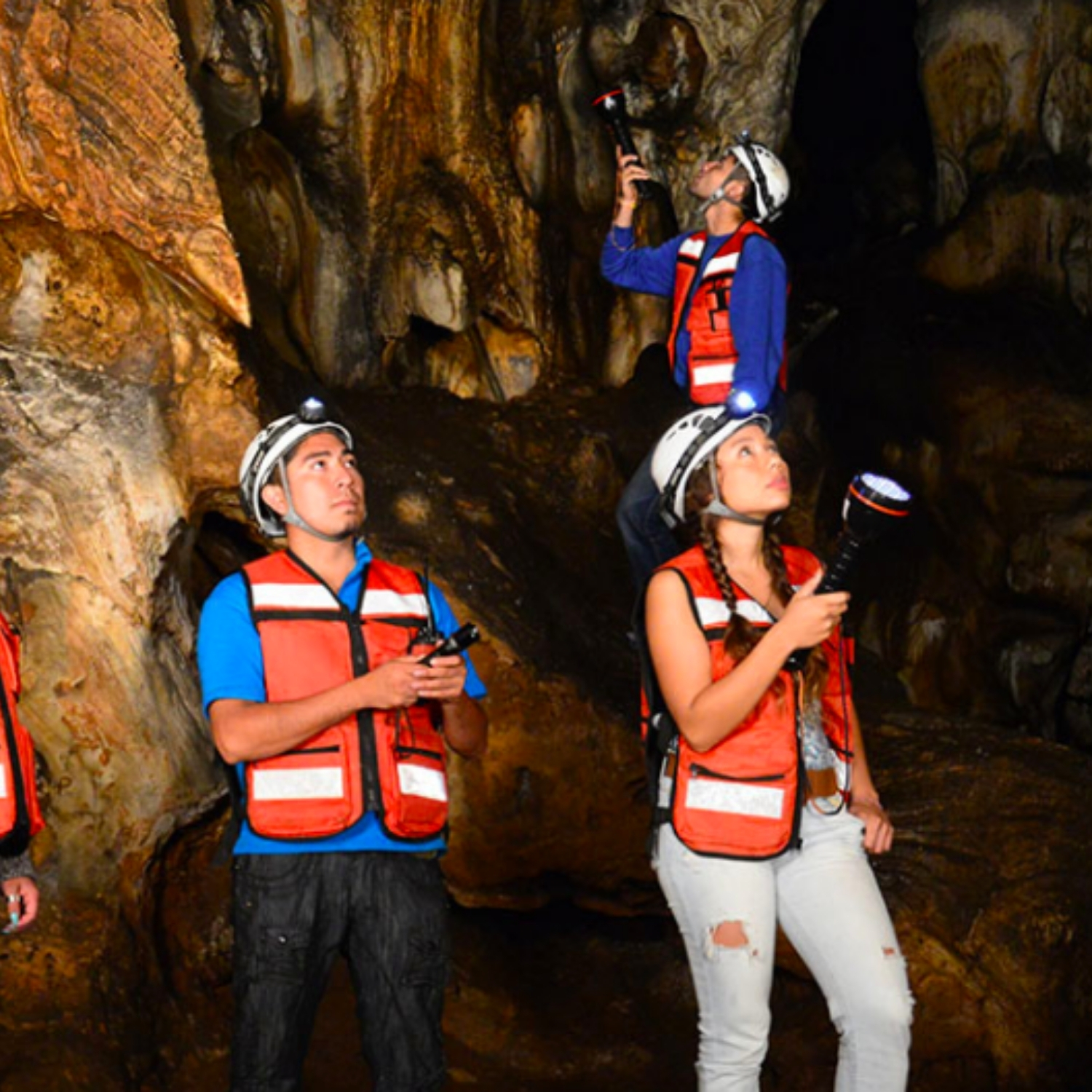
Underground Oaxaca is just as spectacular as what’s above. The cave system at San Sebastián de las Grutas is a geological treasure: vast chambers filled with stalactites and stalagmites, dramatic lighting, and at the heart of it all, a pristine cenote — a natural freshwater pool fed by underground springs. The experience is both visually stunning and refreshingly cool, a welcome contrast to the sun-drenched valleys above.
👉 Go underground: San Sebastián de las Grutas: Caves & Cenote Day Tour
5. San José del Pacífico: Cloud Forest & Hanging Bridges
Perched at over 2,500 meters in the Sierra Sur, San José del Pacífico is the kind of place that stops conversations. The village is almost always wrapped in cloud — thick, moving, cinematic mist that rolls through the pine forest and softens everything. It’s cool, quiet, and profoundly peaceful.
The hanging bridges here offer a suspension walk through the canopy, and the surrounding trails lead into untouched cloud forest where orchids, bromeliads, and rare bird species live. This is Oaxaca at its most mystical.
👉 Experience the clouds: San José del Pacífico & Hanging Bridges Day Tour
Eco Tour Comparison: Which Oaxaca Nature Experience Is Right for You?
| Tour | Difficulty | Duration | Highlight | Best Season | Experience Type |
|---|---|---|---|---|---|
| Hierve el Agua & Mitla | Easy–Moderate | Full day | Petrified waterfalls, ruins | Year-round | Eco-cultural |
| Sierra Juárez Glass Viewpoint | Moderate | Full day | Cloud forest, glass platform | Nov–Apr (dry) | Adventure / Nature |
| Santiago Apoala | Moderate–Challenging | Full day | Canyon, waterfall, Mixtec culture | Oct–May | Remote / Adventure |
| San Sebastián Caves & Cenote | Easy | Half–Full day | Underground cave + cenote | Year-round | Geology / Nature |
| San José del Pacífico | Moderate | Full day | Cloud forest, hanging bridges | Nov–Apr (dry) | Nature / Mystical |
| Puerto Escondido Marine Life | Easy | Full day | Turtles, lagoons, beaches | Year-round | Coastal Eco / Wildlife |
Responsible Travel Tips for Oaxaca Eco Tours
Oaxaca’s natural areas are protected and fragile. Traveling responsibly ensures they stay that way for future generations. The Ministry of Environment and Natural Resources (SEMARNAT) and local communities share stewardship of these zones, and your behavior as a visitor matters deeply.
- Leave No Trace: Pack out everything you bring in. Oaxaca’s remote trails have minimal infrastructure — keep them that way.
- Stay on marked paths: Especially in forest and cave environments, straying off trail can damage root systems and disturb wildlife habitats.
- Use reef-safe and eco-friendly sunscreen: Especially relevant at Hierve el Agua pools and coastal destinations like Puerto Escondido.
- Respect wildlife: Don’t approach or feed animals. Birdwatching is fantastic in Sierra Juárez — bring binoculars, not bait.
- Support local: Buy directly from artisan cooperatives in villages like Teotitlán del Valle. Your purchase sustains a living tradition.
- Dress appropriately: Layers are essential in the mountains — temperatures can swing dramatically between morning and afternoon at altitude.
- Stay hydrated: Higher elevations accelerate dehydration. Bring more water than you think you’ll need.
- Book with local guides: Local knowledge is irreplaceable. Your guide understands the terrain, the ecology, and the cultural protocols.
A Traveler’s Story: Finding Silence in the Sierra Juárez
“I’ve done nature tours in Costa Rica, Patagonia, and the Scottish Highlands. But nothing prepared me for the Sierra Juárez. We drove out of Oaxaca City as the sun was coming up, and by the time we reached the forest, the light through the pine trees was something out of a painting. When I stepped onto the glass viewpoint, my stomach dropped — in the best possible way. I could see the entire valley below, river glinting in the morning sun. Our guide, who grew up in one of the mountain villages, told us the names of the plants and birds in Zapotec first, then Spanish. That detail alone made the whole trip feel rare. I came for the views and left with something much harder to explain.”
— David R., Toronto, Canada
Frequently Asked Questions About Eco Tours in Oaxaca
What is the best time of year for eco tours in Oaxaca?
The dry season (November through April) is generally ideal for most mountain and valley tours, as trails are more accessible and skies are clearer. However, Oaxaca’s biodiversity peaks during and just after the rainy season (June–October), when forests are lush and waterfalls are at full force. Hierve el Agua and the caves are accessible year-round.
Are Oaxaca eco tours suitable for families with children?
Many tours are family-friendly, especially Hierve el Agua, the San Sebastián caves, and the Puerto Escondido coastal experiences. More challenging routes like Santiago Apoala or Sierra Juárez hiking trails are better suited to older children and teenagers with some physical stamina.
Do I need to be physically fit for nature tours in Oaxaca?
It depends on the tour. Cave visits and valley-level cultural tours require minimal exertion. Mountain tours and canyon hikes involve moderate walking on uneven terrain, sometimes at altitude. Always check the specific difficulty level before booking and inform your guide of any health considerations.
What should I pack for an Oaxaca eco tour?
Comfortable closed-toe hiking shoes, layers for temperature changes, a refillable water bottle, sunscreen, a hat, a small daypack, and a camera. For cave tours, a light jacket is recommended. For mountain tours, a windbreaker is essential.
Is ecotourism in Oaxaca truly sustainable?
Oaxaca is home to some of Mexico’s most mature community-based ecotourism models. Many tours are operated by indigenous communities who manage the land collectively, reinvest tourism income locally, and practice traditional conservation methods passed down through generations. Choosing local, community-affiliated tours is the most direct way to ensure your visit is genuinely sustainable.
Can I combine multiple eco tours during one trip to Oaxaca?
Absolutely. Oaxaca City makes an ideal base for multi-day exploration. Most eco tour destinations are within 2–4 hours of the city, making it easy to string together a week of diverse experiences: ruins and waterfalls, mountain forests, caves, and Pacific coast marine wildlife — all within one unforgettable journey.
Information may change; please confirm schedules, regulations, and availability before booking. For legal, environmental, or safety matters, consult local authorities or official sources.
For questions or to plan your Oaxaca eco tour experience, visit the Tours Oaxaca MX homepage.

