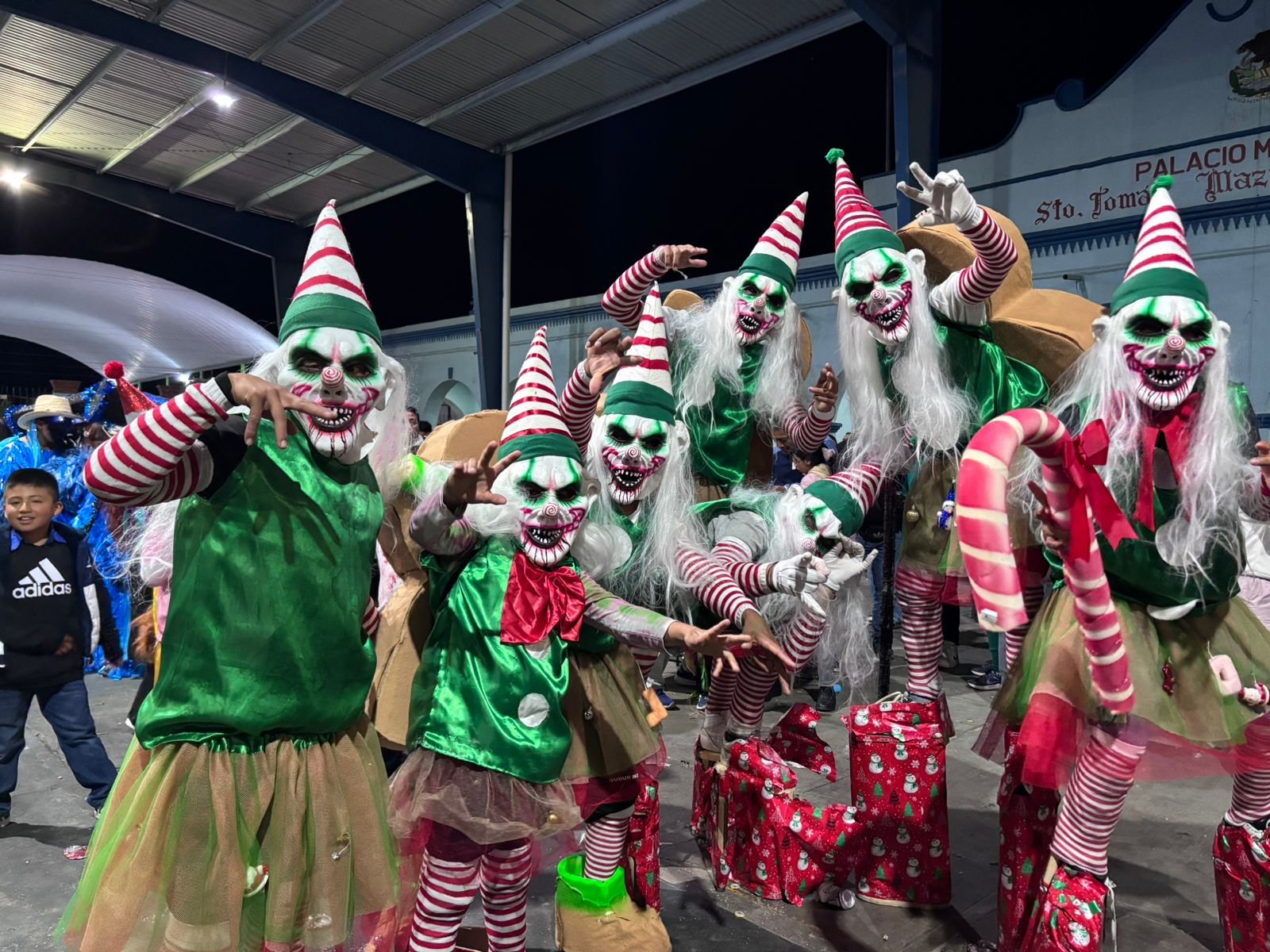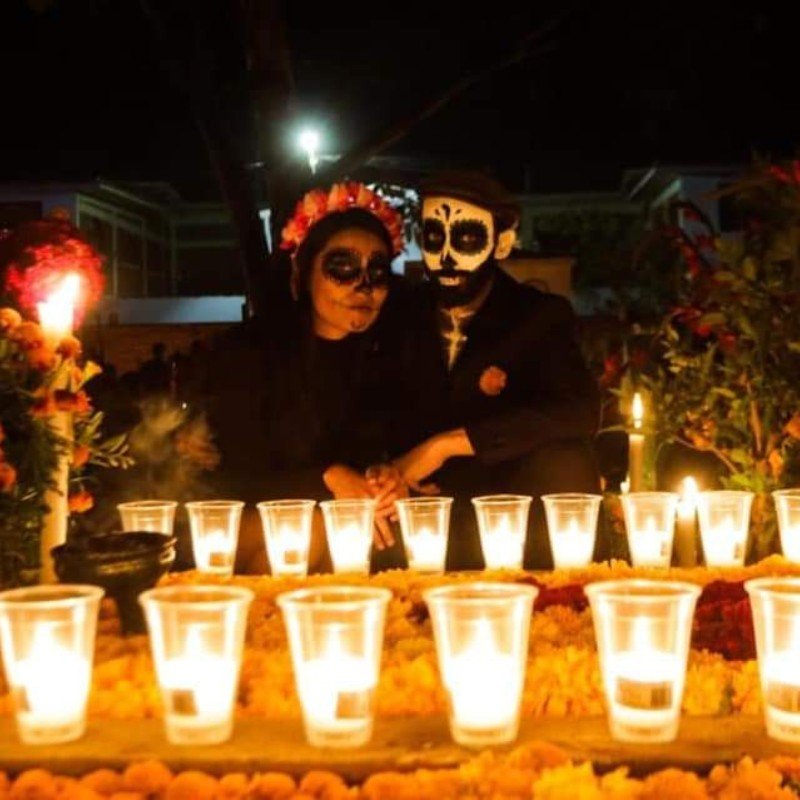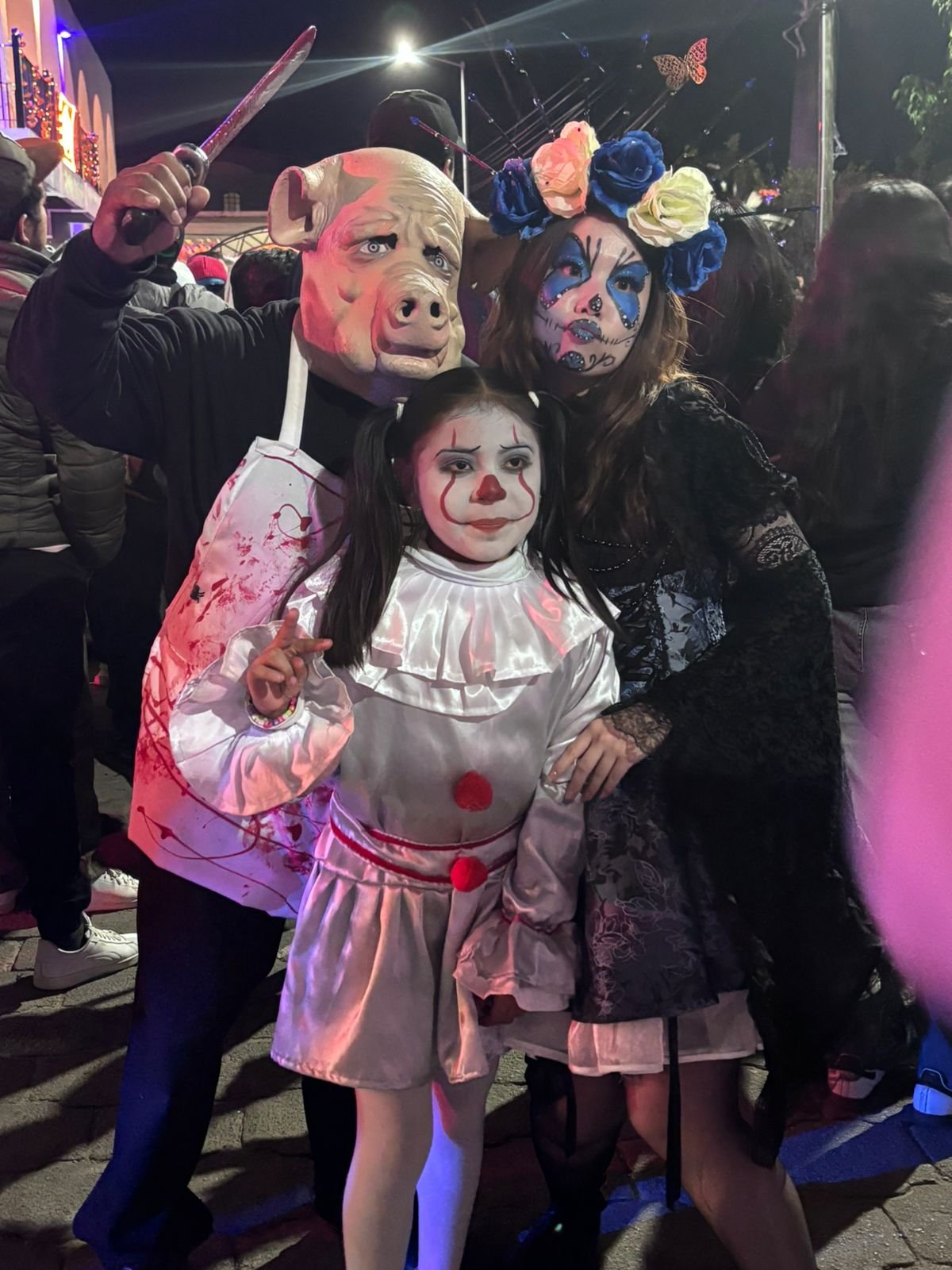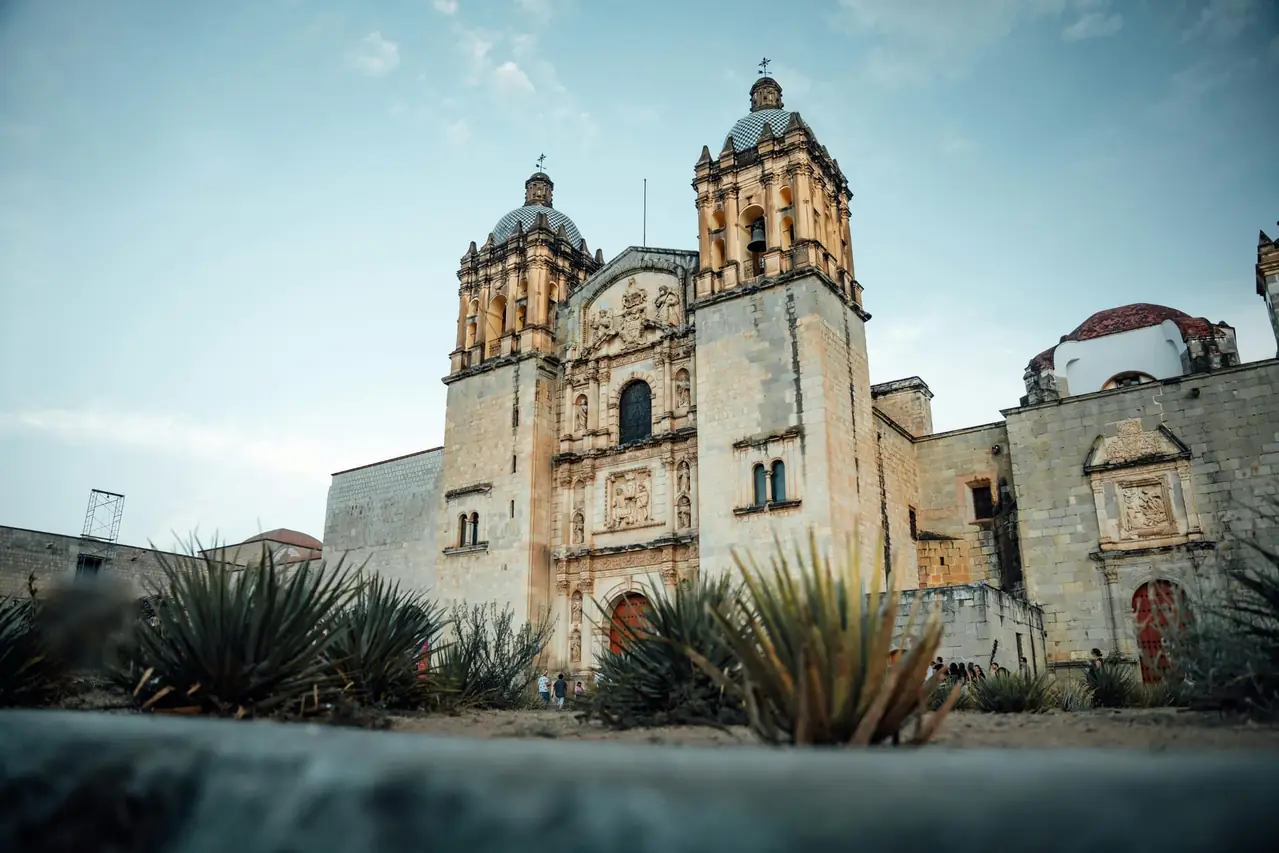
A muerteada in the Etla Valley is difficult to explain with a single English word. It combines street theater, satire, music, dance, masks, neighborhood identity and an all-night procession. It belongs to the community that organizes it, not to a fixed tourist schedule, and every group gives the tradition its own personality.
That is why a muerteada should not be described simply as a Day of the Dead parade. The route can stop, reverse, improvise and continue for hours. Characters act out stories while a brass band sustains the movement. Residents are not an audience separated by barriers; they are participants and hosts.
Muerteada, comparsa and parade are not identical
In everyday conversation the words sometimes overlap, but they are not perfect synonyms. A parade usually follows a public route designed for spectators. A comparsa is a coordinated group of musicians, dancers and costumed participants. A muerteada in Etla often contains a comparsa, yet adds a dramatic structure, traditional roles, satire and a neighborhood organization developed over generations.
Do not expect every town to use the same name or characters. Soledad Etla, Villa de Etla, Guadalupe Etla, San Agustín and nearby communities maintain distinct calendars and styles. Official programs confirm that festivities can extend beyond November 1 and 2.
The music that keeps the night moving
A wind band is the pulse of the procession. Brass and percussion mark entrances, pauses and bursts of dance. The music is physically demanding for performers who walk and play for long periods. Give musicians room, never push through their formation and do not stand directly in front of them for a video.
The route is not efficient by design. A group may circle a block, visit a household or pause for a scene. Visitors who arrive with a rigid timetable often become frustrated. The better approach is to choose one community, stay present and allow the night to unfold.
Characters, masks and satire
Names and roles vary, but spectators may encounter death figures, devils, elders, doctors, brides, grooms and other characters. Their exchanges can comment on mortality, authority, marriage and local events. Comedy is not a rejection of death; it is one way a community speaks about it together.
Masks and clothing are the work of participants and local makers. Avoid grabbing a costume, pulling a mask aside or demanding that a performer repeat an action. Ask before taking a posed portrait, even when the character is playful.
How to attend without getting in the way
- Stay behind the musicians and performers rather than walking through the center.
- Keep entrances, vehicles and narrow streets open.
- Ask permission for close photographs, especially of children.
- Avoid flash and large equipment in dense crowds.
- Buy food and drinks locally, but manage alcohol responsibly.
- Follow announcements from organizers; the route can change.
Practical planning for Etla
Etla lies outside Oaxaca City, and nighttime transportation deserves advance planning. Mobile-service coverage and app-based rides are not guaranteed at the hour you want to return. A guided round trip can simplify the designated meeting point, route and return while giving essential context before arrival.
Wear closed shoes, carry a warm layer and protect valuables in a small bag. Bring cash in modest denominations. Eat before the busiest period and stay hydrated. Most importantly, agree on a meeting point: music, movement and crowds can separate a group quickly.
How long does a muerteada last?
There is no visitor-friendly fixed duration. Some events begin in the afternoon or evening and continue into the morning. A tour usually observes a meaningful portion rather than the entire community route. Read the included hours carefully and do not confuse the event’s total duration with your transportation schedule.
Why local guidance changes the experience
Without context, a visitor may see only masks and noise. A guide can explain which group you are watching, how the route works and which spaces should remain private. Guidance does not grant unlimited access; it helps visitors recognize boundaries.
Join with curiosity, leave without taking over
The right question is not “How do I get into the center of the action?” but “How can I witness this without displacing its owners?” Support local vendors, listen, follow the procession from the edges and accept uncertainty. The muerteada is powerful precisely because it remains a living community practice.
Reading the route as a community map
A muerteada route often reveals neighborhood relationships. Stops can recognize households, sponsors or gathering places, and the procession’s pace reflects those ties. What looks like a delay to an outsider may be the reason the route exists. Avoid asking organizers to skip a stop or accelerate for your schedule.
Sound, space and consent
Because the event is loud and mobile, consent requires extra attention. A performer facing many cameras has not automatically agreed to every close portrait. Step aside, signal your request and wait for a clear response. Drones are especially intrusive and may be prohibited; never launch one above a crowd without explicit authorization.
Food and drink along the way
Seasonal stalls can offer antojitos, bread, chocolate and hot drinks. Buying locally is one of the easiest ways visitors contribute to the host economy. Carry small bills, wait your turn and do not leave cups or plates in the street. If a household offers something to participants, do not assume the invitation extends to every spectator.
Choosing between a cemetery tour and a muerteada
Choose the cemetery route if you want to understand offerings, memory and the atmosphere of decorated burial grounds. Choose the muerteada if your main interest is community performance, bands, masks and movement. Neither is “more authentic”; they express different relationships with the season. Travelers with enough time can attend both on separate evenings.
Questions worth asking your guide
- Which community and group are we visiting tonight?
- What are the names of recurring characters here?
- Which spaces are for residents or participants only?
- Where is the safest place to watch without obstructing the route?
- What time and location are fixed for the return?
When plans change
Rain, community decisions, road closures or an altered program can change the experience. Treat flexibility as part of visiting a living tradition, not as poor stage management. Operators should communicate major changes, but no one can force a neighborhood celebration to perform on demand.
Carry the story accurately
When friends ask what you saw, describe the specific community rather than claiming that all Oaxaca celebrates in the same way. Mention musicians, organizers and local labor, not only costumes. Accurate storytelling is a form of respect and helps future travelers arrive with better expectations.
Final planning note
Day of the Dead travel rewards preparation, but it also requires humility. Programs, routes and access conditions can change as communities make decisions close to the date. Confirm details again during the week of your visit and treat a change as a community choice, not an attraction failing to perform.
Choose locally operated services that explain what is included, keep groups manageable and communicate a return plan. Share your hotel or pickup point accurately, arrive on time and tell the operator about mobility needs before booking. Once there, spend with neighborhood businesses, carry your waste and make room for residents. These practical habits protect both the quality of your trip and the dignity of the celebration.