Every year, thousands of travelers arrive in Oaxaca with a camera in hand and one goal in mind: capturing the perfect image of Día de Muertos. Candles flickering among marigolds, catrina face paint glowing under string lights, copal smoke drifting over graves — these are extraordinary scenes. But before you raise the lens, it's worth remembering something essential: what looks like a striking photograph to you is, to the family standing in front of you, the most intimate night of their year — the moment they honor someone they loved and lost. Photographing Día de Muertos in Oaxaca respectfully isn't just etiquette — it's what separates a stolen image from one shared with consent.
Why Ethics Matter as Much as Technique
Día de Muertos in Oaxaca isn't staged for tourists — it's a living tradition recognized by UNESCO as Intangible Cultural Heritage of Humanity, carried forward generation after generation by Zapotec and Mixtec communities across the Central Valleys. In the cemeteries of Xoxocotlán and Santa María Atzompa, entire families spend the night of October 31st beside their loved ones' graves, cleaning, decorating, and keeping vigil among candlelight and music. Many families genuinely welcome respectful visitors, and some will happily share stories about the person they're remembering. Others prefer their privacy. The difference between being welcomed and being an intrusion almost always comes down to one thing: whether you asked before you shot.
Cemeteries vs. Comparsas: Two Settings, Two Mindsets
Not every Día de Muertos moment should be photographed the same way. It helps to think of the celebration as two distinct settings, each with its own unwritten rules.
Cemeteries: Intimate Grief, Not a Backdrop
A cemetery on the night of October 31st is filled with candles, flowers, and families sitting beside decorated graves. It's visually irresistible — and it's also, quite literally, a graveyard in the middle of a mourning vigil. Before photographing a specific family, approach calmly, make eye contact, smile, and ask (in Spanish if you can, or with clear gestures if you can't). Many Oaxacan families are surprisingly open with curious, respectful visitors, and some will even tell you about the person they're honoring. If they say no, or if you sense you've walked into a private moment of grief or silence, step back without pushing. Never use direct flash on someone who is mourning — beyond being invasive, it also destroys the candlelit atmosphere that made the scene beautiful in the first place.
Comparsas and Muerteadas: More Open to the Camera
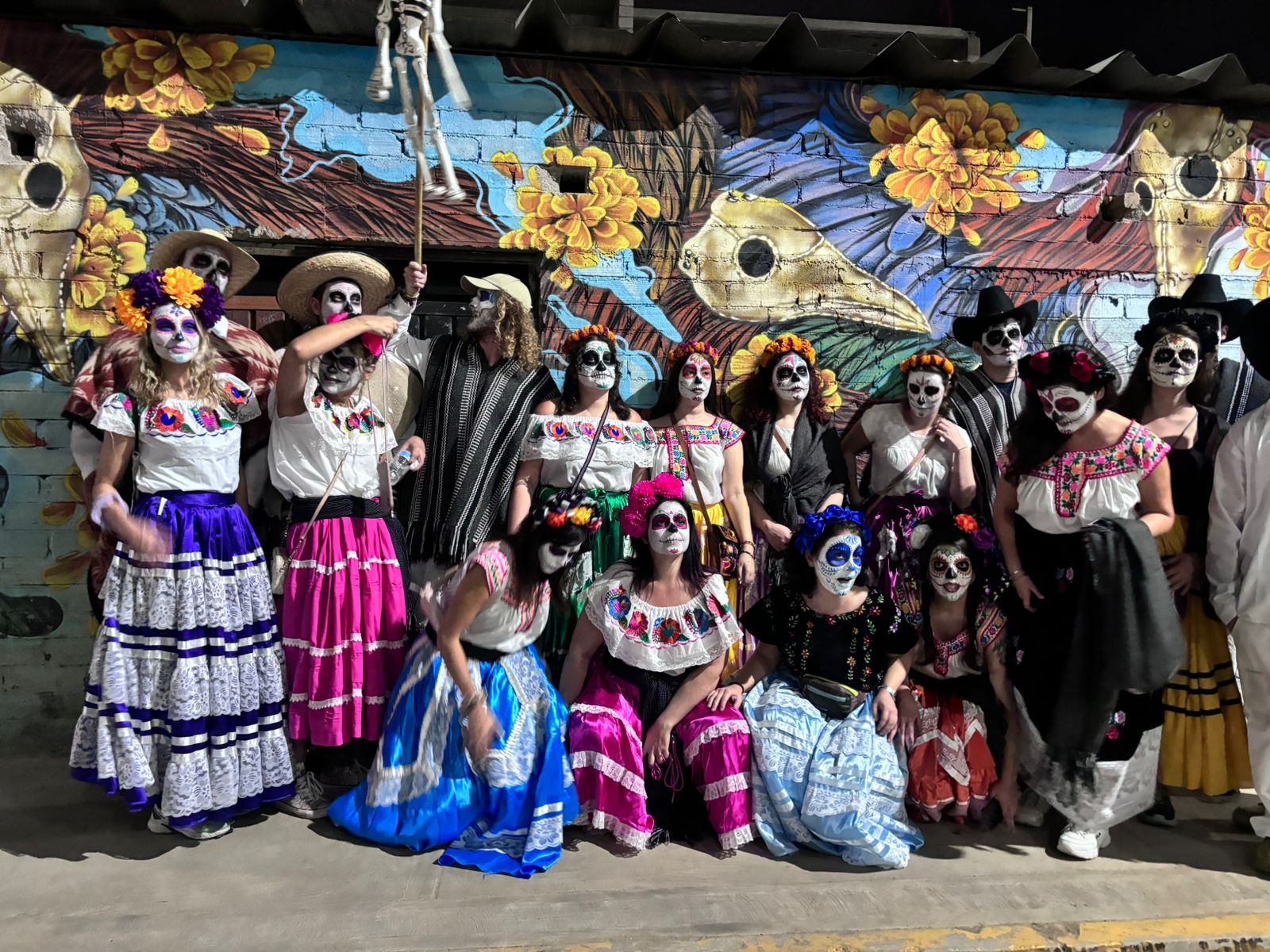
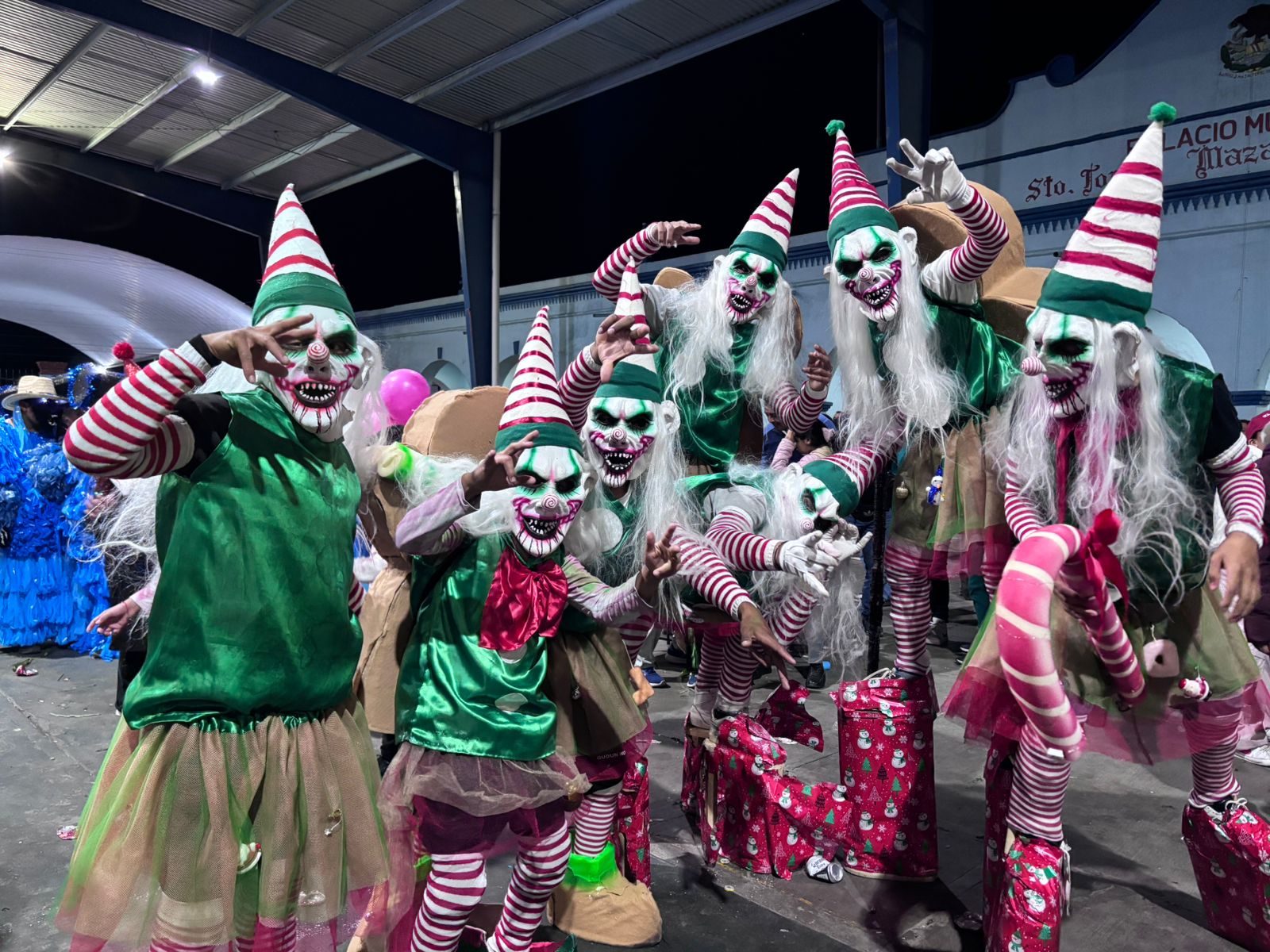
Comparsas — costumed street processions with masks and brass bands, especially vibrant in towns like Etla — are festive, communal events by nature. Participants often enjoy being photographed, and many will happily pose for visitors. Basic respect still applies, though: ask before a close-up portrait, don't block the procession to get your shot, and remember you're inside a community's celebration, not on a film set.
Gear and Settings for Night Photography
Most of Día de Muertos unfolds after dark, lit by candlelight — a real technical challenge. This table sums up what you need to be prepared.
| Item | Recommendation |
|---|---|
| Camera | Any camera with decent low-light performance works; a recent smartphone with night mode is enough for most visitors |
| Lens | A wide aperture (f/1.8–f/2.8) helps capture candlelight without flash |
| ISO | Don't be afraid to push it (800–3200); a little grain beats a blurry shot or an invasive flash |
| Shutter speed | Use a lightweight tripod or brace your camera on a steady surface for slower exposures without losing sharpness |
| Flash | Avoid it entirely in cemeteries; at comparsas, use it only if the person is comfortable with it |
| Battery and memory | Bring extra charged batteries — the nights are long and moments don't wait |
Phone-Specific Night Photography Tips
Most visitors don't show up with professional gear — they show up with whatever is already in their pocket. Fortunately, today's smartphones can produce surprisingly good results in the low-light conditions of a cemetery vigil if you know how to use their tools. If your phone has a "night mode," switch it on manually rather than letting the camera decide on its own — in scenes with many small candle flames, the software sometimes overexposes the lights while trying to "fix" the overall darkness. Keep the phone as still as possible during the capture; bracing your elbows against your chest or resting the phone on a low wall can be the difference between a sharp photo and a blurry one, since night mode often uses exposures of a second or more. Turn off your phone's flash entirely — it almost always produces flat, harsh light that kills the candlelit mood instead of enhancing it. If your phone lets you tap to set focus and exposure, tap directly on a candle or an illuminated flower so the rest of the scene keeps its warm, dark atmosphere instead of looking gray and flat. Finally, wipe your lens before you start — dust and fingerprints are far more noticeable in high-contrast night shots than in daylight photos.
Composition Ideas, Scene by Scene
Beyond a simple list of pretty angles, each Día de Muertos setting has its own visual language. Pausing to think about what story you want to tell — before you shoot — tends to produce far more memorable images than simply pointing your camera at everything that glows.
- Rows of candles on a grave: shoot low to the ground, almost lying down, so the flames dominate the foreground and the rest of the cemetery softly blurs behind them. This low angle conveys the scale of the ritual better than a standing shot ever could.
- Hand portraits: arranging flowers, lighting a candle, holding a family photograph — these tell the story of grief without needing to show a face, which is also a respectful alternative when privacy is a real concern.
- The trail of marigold petals: traditionally said to guide souls home. Photographed from a low angle, with the path receding toward a vanishing point, it conveys movement and purpose.
- Full altars (ofrendas) in context: try to capture the entire ofrenda — photographs, food, flowers, copal — rather than cropping in on a single element; the full arrangement is what tells the story of who that person was.
- Catrina makeup at comparsas: look for side light — from a street lamp or someone else holding a candle — to bring out the texture of the paint and avoid the flattening effect of direct front lighting.
- Wide shots of a candlelit cemetery: from a raised vantage point or a medium distance, showing the sea of candles without zeroing in on any one family; it's one of the most respectful ways to capture the scale of the scene without compromising anyone's privacy.
- Silhouettes against candlelight: position a person (with their permission) between your camera and a group of candles to create a dark outline set against the warm glow — this works especially well during processions.
- Textural details: cut paper banners (papel picado), fresh flower crowns, copal smoke catching the light — these close-ups add variety to your photo set without always relying on faces or full scenes.
Editing Ethics: What to Do and What to Avoid
Respectful work doesn't end when you put the camera down — it continues at your computer. With today's software, it's tempting to intensify candle colors, "clean up" a stranger who wandered into frame, or blend several exposures into something more dramatic than what actually happened. Before you do, it's worth asking whether that edit honors the scene or turns it into something else. Basic adjustments to exposure, contrast, and white balance so the photo looks the way you remember the moment are entirely reasonable. But removing a grieving person from the image without their knowledge, dramatically altering a real vigil to make it more "cinematic," or using AI tools to add elements that were never there crosses a different line: it turns a family's real moment into visual entertainment disconnected from what actually happened. A good rule of thumb: if the edit would embarrass you to explain to the family you photographed, you probably shouldn't make it.
Video and Audio: The Etiquette Few People Mention
More and more visitors record video in addition to stills, and the brass-band music of a comparsa is, without question, part of the experience. But recording video and audio brings its own set of considerations. If you're filming a band playing in the street during a comparsa, that's a public, festive space, so it's generally fine — though shoving a microphone directly in a musician's face without asking is still invasive. Inside a cemetery, the calculus shifts: recording the general ambience (candle sounds, distant murmurs, faraway music) tends to be acceptable, but filming a specific family in video — capturing their private conversation or their tears — is far more invasive than a single photograph, because it documents a continuous, intimate moment rather than an instant. If you livestream from your phone, be especially careful: a live broadcast removes any chance to ask for consent afterward, or to decide not to share a moment that, in hindsight, didn't feel appropriate to publish.
A local guide can be your best photography ally on this night — they know which families tend to welcome visitors, when a comparsa is about to pass, and how to help you ask permission at the right moment. The cemetery night tour includes a certified bilingual guide, which not only simplifies logistics but opens cultural doors that rarely open for a solo visitor.
Mistakes to Avoid
- Photographing someone's crying face without asking first
- Flying a drone over cemeteries without authorization — it's invasive and often restricted
- Stepping on graves or moving items from an altar to "improve" a composition
- Posting identifiable photos of people on social media without their explicit consent
- Treating a cemetery like a photo set, with poses that feel out of place in the atmosphere
- Editing a real moment of grief to look more dramatic or "cinematic" than it actually was
- Recording extended video of a specific family without asking, even if you already photographed the moment
Comparison: Nighttime Día de Muertos Experiences with Tours Oaxaca MX
| Tour | Date | Atmosphere | Best for photographing |
|---|---|---|---|
| Cemetery night tour | Night of October 31 | Intimate, contemplative | Candles, altars, nighttime atmosphere |
| Muerteada in Etla | Night of November 1 | Festive, in motion | Costumes, brass bands, community energy |
Frequently Asked Questions About Photographing Día de Muertos in Oaxaca
Is it allowed to take photos in Oaxaca's cemeteries?
Yes, generally it is, and many families welcome curious visitors. Even so, it's always good practice to ask permission before photographing specific people, especially during visible moments of grief.
Can I use a drone to photograph Día de Muertos?
Flying drones over cemeteries during the vigil is not recommended — it's invasive for families and is often restricted. Always check with your guide or cemetery authorities before considering it.
What camera do I need for night photography in the cemeteries?
You don't need professional gear. A camera or smartphone with decent low-light performance, ideally with adjustable ISO or a night mode, is enough to capture the candlelit atmosphere without resorting to flash.
Is it better to photograph with a guided tour or on my own?
A local guide makes the experience much smoother — they understand the cultural context, can help you ask permission appropriately, and know which cemeteries and times offer the best mix of access and respect. This is especially valuable if you don't speak Spanish.
Can I post my Día de Muertos photos on social media?
You can share landscape shots, general altars, and public comparsa scenes without issue. For photos where a person is clearly identifiable, the most respectful approach is to ask their consent before posting, especially if they're in a moment of mourning.
Is it acceptable to record video of comparsas and muerteadas?
Yes, since it's a public, festive event, filming a comparsa as a whole is generally well received. Avoid getting your camera too close to a single participant without their consent, and remember you're still a guest inside a community's celebration.
What should I do if a family tells me they don't want to be photographed?
Respect their decision immediately, thank them with a smile, and step back without pushing or trying to sneak a second shot. There are plenty of respectful opportunities in a cemetery that you never need to force one.
Conclusion: The Best Photo Is the One Taken With Permission
The most memorable Día de Muertos images from Oaxaca aren't necessarily the most technically perfect ones — they're the ones that carry a story of genuine connection: the family who invited you closer, the moment someone told you who was in the photo on the altar, the smile of permission before the shutter clicked. Photographing with respect doesn't limit your creativity — it enriches it, because it forces you to look first as a human being and only then as a photographer. Bring your camera, prepare technically, edit honestly, and above all, let respect guide every frame.
Information may change; confirm current schedules and recommendations before your visit. Check the Oaxaca State Tourism Secretariat (SECTUR) for up-to-date tourism information.