At the foot of the hill where Monte Albán sits, tucked among quiet streets and courtyards dusted with colorful sawdust, lies San Antonio Arrazola — the Zapotec village where the modern alebrije tradition was born. Here, generations of families carve copal wood and transform it into fantastical creatures painted with a precision that seems almost impossible by hand. Visiting Arrazola isn't just about buying a craft piece; it's about stepping into the courtyards and workshops where this tradition is still alive, carved piece by piece in front of you.
The Origin of Alebrijes in Arrazola
Unlike what many visitors assume, alebrijes are not an ancient pre-Hispanic tradition — they were born in the 20th century, and Arrazola played a key role in their development. Woodcarver Manuel Jiménez, a native of this village, is recognized as one of the central figures who popularized carving copal wood into fantastical animal figures, painted in vivid colors and intricate geometric patterns. Over time, dozens of families in the village adopted and refined the technique, turning Arrazola — alongside San Martín Tilcajete — into one of the two best-known epicenters of this craft in the world.
For the fuller story of how alebrijes came to be — including the artist's fever-dream origin and what the creatures symbolize — see our complete guide to alebrijes explained.
The base material is copal wood, a soft, lightweight tree that grows in the region and is carved while still fresh and moist, then left to dry before painting. Each piece can take anywhere from days to weeks of work depending on its size and the complexity of the design — which explains why buying directly from the artisan, rather than through a middleman, carries so much value, both economically and culturally.
How to Get to Arrazola from Oaxaca City
| Detail | Information |
|---|---|
| Distance from Oaxaca City | ~10-12 km (30-40 minutes by car) |
| Location | At the foot of the Monte Albán hill, southwest of the city |
| What's made here | Alebrijes carved from copal wood, hand-painted |
| Best time to visit | Morning, when workshops are most active |
| Often combined with | Monte Albán and San Bartolo Coyotepec (black pottery) |
Arrazola sits in the same direction as Monte Albán and San Bartolo Coyotepec, which makes it easy to combine into a single outing. Getting there independently by taxi or private vehicle is possible, but most visitors prefer a guided tour that includes Monte Albán, Arrazola, and San Bartolo Coyotepec in a single day, since the guide knows which workshops to visit and can translate the craft process for non-Spanish speakers.
From Log to Painted Figure: How an Alebrije Is Made
Understanding the process makes the visit feel completely different from simply seeing finished pieces on a shelf. While every family has its own timing and details, the general process follows a recognizable sequence:
- Wood selection and cutting: artisans look for fresh copal, still holding moisture, because it's far easier to carve than dried wood. The tree is cut responsibly, allowing the stump to resprout.
- Rough carving: using a machete and small knives, the artisan works out the general shape of the figure — a real animal reimagined, or a fantastical creature blending features from several animals.
- Fine detailing: smaller tools refine claws, scales, wings, horns, or any distinctive element of the piece.
- Drying: the carved piece is left to dry for weeks, sometimes months depending on size, to keep it from cracking as it loses moisture.
- Sealing: a base coat prepares the wood to receive paint and helps the colors appear more vivid.
- Hand-painting: this is the stage that sets each workshop apart. Using fine brushes, usually pointillism or repeated geometric lines, artisans cover the piece with patterns that can take full days of meticulous work.
Styles and Motifs: How to Recognize Each Family's Work
One of the most interesting parts of visiting several workshops in a single day is noticing how each family has its own painting style, almost like a signature. Some workshops are known for dense pointillism, where thousands of tiny dots in contrasting colors cover the entire surface of the piece. Others favor wavy or geometric line patterns that follow the contour of the animal's body, creating an almost hypnotic effect. It's also common to find highly saturated color combinations — turquoise, orange, Mexican pink — alongside workshops that prefer earthier, nature-inspired palettes. Asking the artisan about the meaning behind their palette or patterns usually opens up a much richer conversation than simply buying the piece.
A Tradition Passed Down: Multi-Generational Families
What sets Arrazola apart from an ordinary craft market is that the knowledge is almost always passed down within the same family. It's common to see grandparents carving while grandchildren watch and, little by little, begin practicing on small, simple pieces before attempting more complex figures. Mothers and daughters often handle much of the painting, a craft that demands patience and a steady hand, learned by many of them since childhood by observing earlier generations. This informal, household-based learning system is why each workshop keeps a recognizable style for decades: it isn't a technique written down in a manual, but knowledge passed hand to hand, generation to generation.
What to Expect on a Visit to Arrazola
- Family workshops open to the public, where you can watch the full process: carving, sanding, sealing, and hand-painting, often carried out by several generations of the same family working together in the same courtyard.
- Pieces in every size, from small figures that are easy to carry home to large sculptures that require international shipping.
- Distinctive geometric patterns — each workshop and artisan tends to have a recognizable painting style, with dots, lines, and colors that set their work apart from their neighbors'.
- A calm village atmosphere, very different from the pace of downtown — quiet streets, open courtyards, and an unhurried, meticulous rhythm of work.
- The chance to buy directly from the artisan, which directly supports the families keeping this tradition alive, with no middleman.
- Genuine conversation with artisans, many of whom enjoy explaining their process and the story behind their pieces to anyone who shows real interest.
Arrazola as Part of a Craft Route
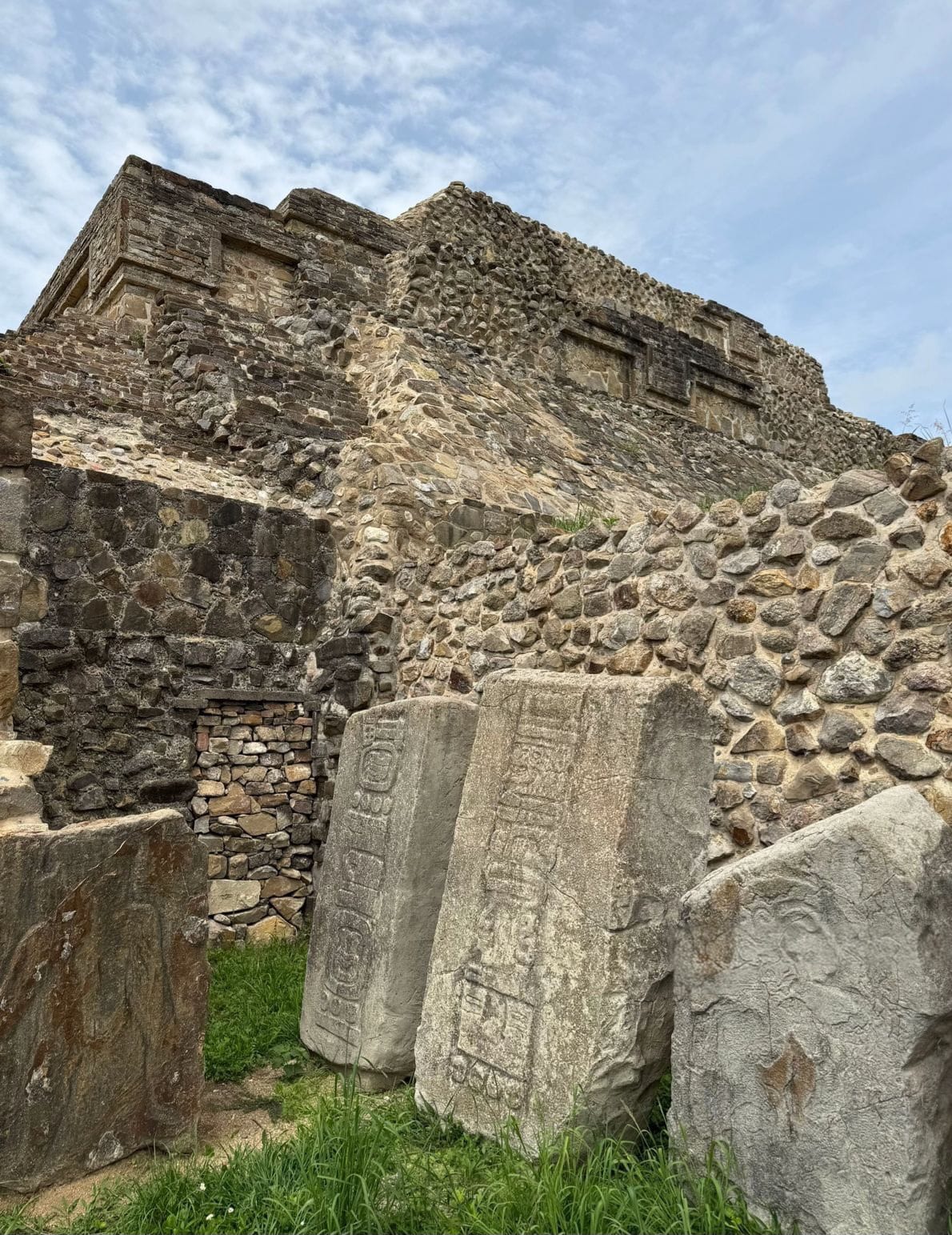
The best way to understand Arrazola is as part of a wider route through the craft villages of the Central Valleys. In a single day it's possible to walk the ceremonial plazas of Monte Albán, watch an alebrije being carved and painted in Arrazola, and finish by observing the hand-burnishing of black clay in San Bartolo Coyotepec — three completely distinct traditions, all within a short radius of Oaxaca City.
| Tour | Duration | Experience type | Price from |
|---|---|---|---|
| Monte Albán, Arrazola & San Bartolo Coyotepec | Full day (~9 hrs) | Archaeology, alebrijes, black pottery | $400 MXN |
| Hierve el Agua, Mitla & Mezcal | Full day (~8-11 hrs) | Nature, ruins, mezcal | $500 MXN |
| Cemetery night tour (Day of the Dead) | Night of October 31 | Culture, tradition, remembrance | $1,550 MXN |
Essential Tips for Visiting Arrazola
- Bring cash: many family workshops, especially smaller ones, don't have card readers.
- Ask before taking photos inside workshops — most artisans are open and friendly, but it's a respectful gesture to ask first.
- Consider shipping if you're eyeing a large piece; many workshops have experience shipping abroad.
- Visit in the morning, when workshops tend to be most active and artisans have more time to explain the process.
- Combine your visit with Monte Albán and San Bartolo Coyotepec to make the most of the trip from the city.
- Take your time at more than one workshop: comparing styles across two or three different families helps you appreciate the tradition's variety before deciding what piece to take home.
Frequently Asked Questions About Arrazola
What's the difference between Arrazola and San Martín Tilcajete?
Both are villages known for their alebrijes, but each has its own family tradition and painting style. Arrazola is closer to Oaxaca City and is usually visited alongside Monte Albán, while Tilcajete lies in a different direction, toward the south of the valley.
Can I watch the full carving and painting process?
Yes, most family workshops in Arrazola are open to showing visitors the process, from carving the copal wood to sealing and final hand-painting.
How much time do I need to visit Arrazola?
One to two hours is usually enough to visit several workshops at a relaxed pace, though it can run longer if you enjoy talking with artisans or want to wait while a custom piece is finished.
Can I buy large alebrijes and have them shipped to my country?
Yes, many workshops in Arrazola have experience packing and arranging international shipping, though timing and cost vary by piece size and destination. It's best to ask the artisan directly.
Can I visit Arrazola independently, without a tour?
Yes, it's possible to get there by taxi or private vehicle. That said, a guided tour that includes Monte Albán and San Bartolo Coyotepec usually offers more cultural context and makes the logistics of visiting all three destinations in one day much easier.
How long does it take to carve and paint an alebrije?
It depends heavily on size and complexity: a small piece can be finished in a few days, while a large sculpture with detailed patterns can take several weeks, including the time the wood needs to dry before painting.
Conclusion: A Tradition Carved by Hand, Family After Family
Arrazola isn't a museum or a souvenir shop — it's a village where the art of carving and painting alebrijes keeps passing from one generation to the next, courtyard by courtyard. Walking through its workshops, seeing up close the patience each brushstroke requires, and talking with the artisans keeping this tradition alive is one of the most authentic cultural experiences to be had near Oaxaca City.
Information can change; confirm workshop hours and availability before your visit. Visit Mexico's Secretaría de Cultura for more on the country's traditional crafts.