


 Oaxaca Culture
Every year, as October gives way to November, Oaxaca transforms. Marigold petals line cobblestone streets, copal smoke drifts through cemeteries at midnight, and families gather around candle-lit altars to welcome back their dead. It is one of the most moving cultural events in the world — and also one of the most misunderstood. If you are planning to witness it, you owe it to yourself (and to the Oaxacan people) to know the difference between what is genuine and what has been reimagined for an audience. This guide will help you experience Día de los Muertos with real depth and respect.
The Deep Roots: Understanding Oaxaca’s Day of the Dead
Long before Spanish colonizers arrived, the Zapotec and Mixtec peoples of what is now Oaxaca performed elaborate rituals to honor their ancestors. They believed death was not an ending but a transition — that the dead continued to exist in a parallel world and could return, briefly, to share in the warmth of the living. When Catholicism arrived, these practices fused with All Saints’ Day and All Souls’ Day, creating the layered, complex celebration we know today.
In Oaxaca, this is not a single night of festivities. It unfolds across nearly two weeks, beginning with preparations in late October and culminating on November 2nd. Different days carry different meanings:
- October 31 (Día de los Angelitos): Altars are prepared for children who have died. Offerings include small toys, candies, and foods the child loved in life.
- November 1 (Día de Todos Santos): The vigil for adults begins. Families spend the night in cemeteries, cleaning and decorating graves.
- November 2 (Día de Muertos): The most solemn day. Communities gather in full, the offerings are blessed, and the spirits are said to return to their world before dawn.
This is a living tradition. It belongs to specific families, specific villages, and specific communities — each with their own variations. UNESCO recognized the Indigenous festivity of the Day of the Dead as an Intangible Cultural Heritage of Humanity, underscoring its global significance and the importance of preserving its integrity.
What Is Genuinely Authentic
The most authentic expressions of Day of the Dead in Oaxaca happen quietly, within families and communities — not on stages or in organized parades designed for cameras.
Cemetery Vigils in the Villages
The all-night cemetery vigils in Oaxaca’s indigenous villages are the beating heart of the tradition. Panteón General in Oaxaca City draws visitors, but the truly profound experiences happen in smaller communities: Xoxocotlán, Atzompa, Zaachila, Etla, and dozens of villages scattered across the valleys. Here, families arrive at dusk with armfuls of cempasúchil (marigold) petals, candles, mezcal, mole negro, pan de muerto, and whatever their departed loved one cherished most in life.
They sit through the night. They cry, they laugh, they drink together. Children fall asleep on mats while grandmothers pray in Zapotec. It is intimate, unscripted, and deeply human. Visitors who approach with genuine reverence — who sit quietly, do not photograph without permission, and understand they are guests — are often welcomed warmly.
The Home Altars (Ofrendas)
Inside Oaxacan homes, the ofrenda is prepared with meticulous love. Seven levels on the altar represent the stages the soul must pass through before reaching the underworld. Objects placed on it — photographs, favorite foods, clothing, tools, a glass of water — are not decorative but deeply intentional. Each item is an invitation and a message to the dead: We remember you. Come back.
You will not see these altars unless a family invites you in. The best way to encounter them is through local relationships — staying with a host family, visiting artisan villages in the Tlacolula Valley, including Teotitlán del Valle, or attending community-level events rather than the ticketed performances in the city center.
The Role of Mezcal and Food
Food and mezcal are not peripheral to Day of the Dead — they are sacramental. Tlayudas, mole negro, tamales de rajas, and chocolate atole appear on altars because they were loved in life. Mezcal is poured both for the dead and for the living, always with a toast, never carelessly. Eating these foods during the vigil is participation, not tourism. If someone offers you a dish at a cemetery, accept it with gratitude.
What Has Become Primarily Touristic
This is the harder conversation — but an honest one. Over the past decade, driven by social media and international interest following the success of films like Coco, Day of the Dead in Oaxaca City itself has changed significantly. Some of what you now encounter in the city center is a performance of the tradition rather than the tradition itself.
The Grand Cemetery Parade (Comparsas)
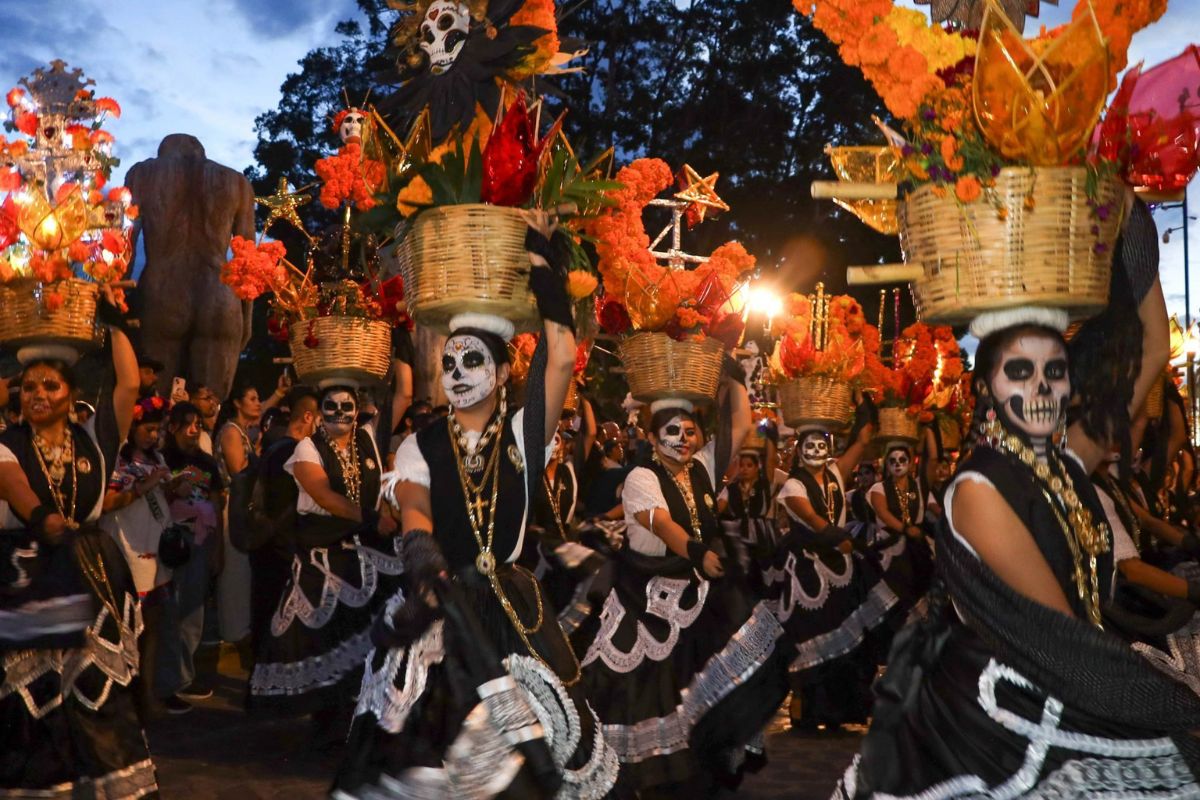
The large comparsas — colorful skull-faced street parades through the Zócalo and Macedonio Alcalá — are visually spectacular and genuinely joyful. But be honest about what they are: a festive public celebration, not a sacred ritual. They were largely absent from Oaxaca’s tradition a generation ago and have grown in direct response to tourism. There is nothing wrong with attending them — they are lively, communal, and fun — but do not mistake them for the core of what Day of the Dead means here.
Face Painting and Skull Costumes
The iconic Catrina image — a skeleton in elegant dress — originates with Mexican artist José Guadalupe Posada and was later popularized by Diego Rivera. It is a powerful cultural symbol. But the explosion of painted faces and elaborate skull costumes on tourists throughout Oaxaca City in late October is largely a recent phenomenon shaped by Halloween crossover culture and Instagram aesthetics. Indigenous Oaxacans at a village cemetery vigil do not wear face paint. Participating in a face-painting booth is harmless fun, but understand it as aesthetic tourism rather than cultural immersion.
Organized “Day of the Dead Tours”
There is a spectrum here. Tours that escort large groups of tourists through the Panteón General cemetery with guides who speak in loud voices, pausing for photo ops, range from mildly disrespectful to genuinely intrusive. On the other hand, small-group cultural tours led by local guides who have real community relationships — guides who can take you to a village where the family knows and welcomes you — can be profoundly meaningful. The difference is in the guide, the group size, and the intent.
A Traveler’s Story
“I had seen the photos online — marigold carpets, candles everywhere, it looked like a movie set. But nothing prepared me for sitting in the Xoxocotlán cemetery at 2 in the morning. A woman next to me was talking to her husband’s grave like he could hear every word. Her granddaughter was asleep on her lap. Someone passed me a cup of mezcal without a word. I didn’t speak much Spanish. It didn’t matter. I cried and I didn’t know exactly why, but it felt like the most human thing I’d ever experienced.”
Practical Guide: Visiting Day of the Dead in Oaxaca Respectfully
The Best Villages to Visit
Beyond Oaxaca City, the surrounding valleys hold some of the most moving observances. Villages like Xoxocotlán and Atzompa open their cemeteries to respectful visitors. The artisan community of San Bartolo Coyotepec and Arrazola, both known for their craftsmanship, also hold deeply traditional vigils. The pre-Hispanic ruins of Monte Albán sit just above the valley where many of these communities live, and visiting during the season adds historical depth to the cultural experience.
Logistics & Planning Table
| Date | What Happens | Best Location | Crowd Level | Recommended For |
|---|---|---|---|---|
| Oct 28–30 | Altar preparations, market visits, early comparsas | Oaxaca City markets & neighborhoods | Moderate | First-timers, photographers |
| Oct 31 | Día de los Angelitos — children’s altars | Indigenous villages, home altars | Low–moderate | Cultural depth seekers |
| Nov 1 (night) | Cemetery vigils begin, families arrive at dusk | Xoxocotlán, Atzompa, Etla, Zaachila | High in main cemeteries | All visitors (with guide) |
| Nov 2 (day) | Final offerings, prayers, communal meals | Village cemeteries, family homes | Moderate | Those with local connections |
| Nov 2 (evening) | Spirits depart, closing ceremonies | All sites | Low | Reflective travelers |
Visitor Tips for a Respectful Experience
- Ask before photographing: At cemetery vigils, always ask permission before pointing a camera at families or altars. A simple gesture and eye contact goes a long way. Many families will say yes — warmly.
- Dress appropriately: Cemetery vigils are solemn gatherings. Avoid bright colors, costumes, or anything that draws attention to yourself.
- Arrive with a local guide: A knowledgeable local guide not only unlocks deeper access but ensures you are not inadvertently crossing lines communities have set.
- Bring an offering if invited: If you are welcomed to a family’s altar or grave, bringing candles, marigolds, or copal incense is a gesture of genuine respect.
- Visit the artisan villages beforehand: Understanding the weaving traditions of Teotitlán del Valle or the alebrijes of San Martín Tilcajete before the holiday gives you cultural context that transforms the experience.
- Stay longer than one night: The full arc of the celebration across several days reveals its true texture. A single night visit, especially to a large city cemetery, captures the surface only.
You can also enrich your understanding of Oaxaca’s indigenous traditions before the holiday by exploring the Sierra Juárez mountain communities of the Northern Sierra, where Zapotec culture remains vivid year-round.
Frequently Asked Questions
Is Day of the Dead in Oaxaca safe for tourists?
Yes. The cemeteries are full of families, the atmosphere is warm and communal, and the event is deeply non-threatening. The main thing to be aware of is showing respect. Petty theft can occur in crowded urban areas, so keep valuables secure in the Zócalo.
Can non-Mexican visitors attend cemetery vigils?
In most Oaxacan communities, yes — as long as visitors approach with genuine respect and follow local norms. Some villages have started to limit access in recent years due to overcrowding and disrespectful behavior by some tourists. Going with a guide who has real community relationships makes access both more likely and more meaningful.
Is the Day of the Dead in Oaxaca the same as in Mexico City or other states?
Not exactly. Each region of Mexico has its own variation. Oaxaca’s version is particularly deeply rooted in Zapotec and Mixtec indigenous traditions, and the cemetery vigils here carry a distinct atmosphere. The Oaxaca State Tourism Secretariat provides official regional information on the celebration.
What is the best village cemetery to visit?
Xoxocotlán and Atzompa are the most visitor-accessible while retaining genuine community character. For a quieter, more intimate experience, ask a local guide to take you to a smaller village in the Cañada or the Central Valleys.
How does Day of the Dead connect to Oaxaca’s pre-Hispanic ruins?
Deeply. The Zapotec civilization buried their dead at sites like Monte Albán and Mitla with elaborate offerings and a sophisticated cosmological understanding of death. Many of the beliefs still practiced today have direct roots in those ancient traditions. Visiting the ruins before the holiday is a remarkable way to connect the dots.
Are there tours specifically designed for respectful cultural immersion?
Yes. Small-group tours led by local guides with genuine village connections are the best way to experience the holiday meaningfully. Look for Tours Oaxaca MX, which operates with local experts focused on authentic cultural experiences year-round — not just during the holiday season.
Information may change; please confirm schedules, regulations, and availability before booking. For legal, environmental, or safety matters, consult local authorities or official sources. You can also find general tourism information through the federal Secretariat of Tourism (SECTUR) and INEGI for demographic and cultural data about Oaxacan communities. For any questions or to plan your visit, visit our homepage or reach out to our team directly.


